
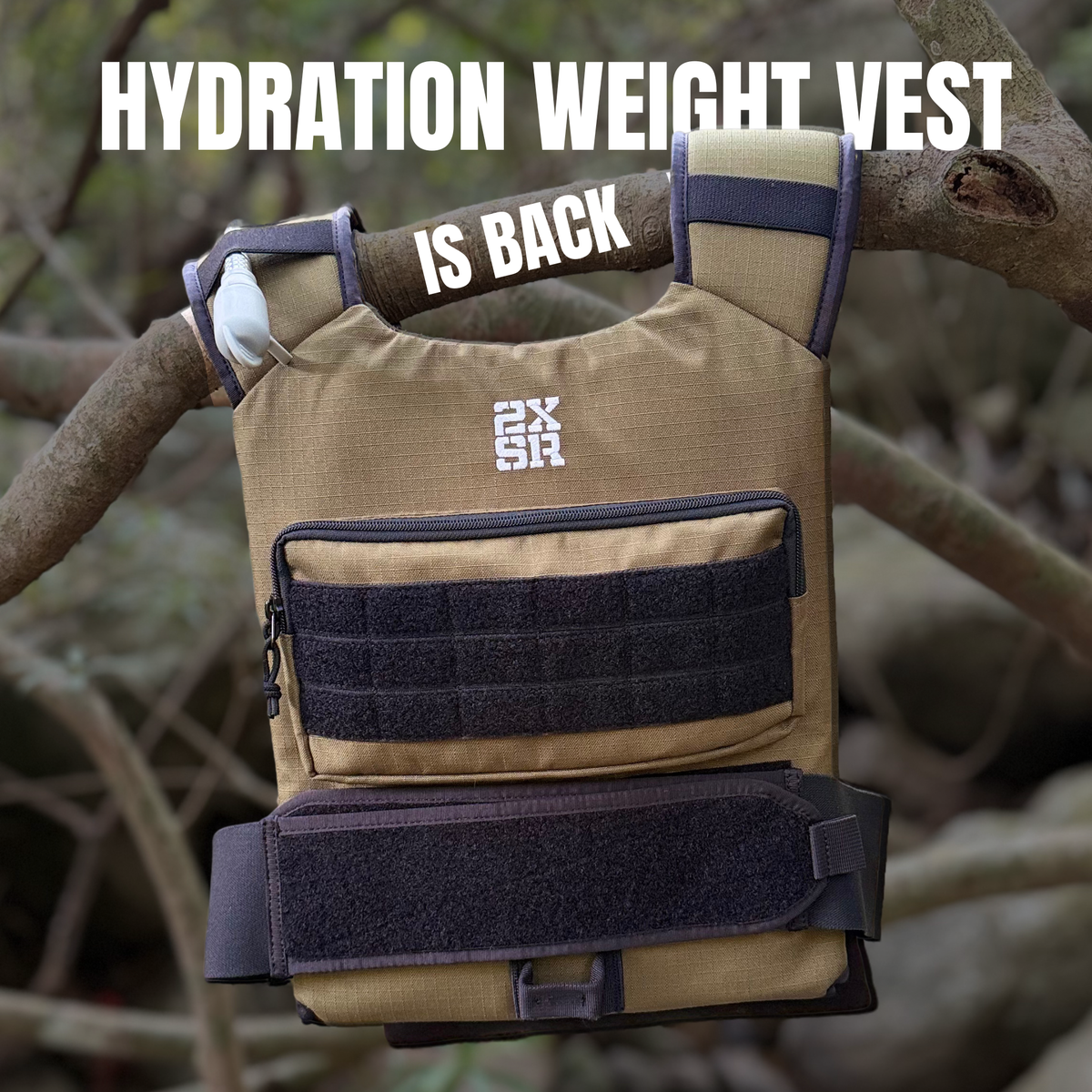
Why a Weighted Vest with Front AND Back Panels Changes Everything
Not all weighted vests are created equal. The single most important design feature separating a great weighted vest from a mediocre one is balanced front-and-back weight distribution — and yet many consumers don't realize this is a key differentiator when shopping.
A weighted vest that loads weight exclusively on the back (like a rucksack-style carrier) shifts your center of gravity backward, forcing your spine to compensate and increasing injury risk over time. A vest with weight panels on both the front and back distributes load symmetrically around your core — the way your body was designed to carry resistance.
"Even weight distribution across front and back panels reduces spinal strain — a critical advantage over cheaper vests that concentrate mass centrally."
This guide covers everything you need to know: the science-backed benefits, how to choose the right vest, who benefits most, how to train safely, and how today's top competitors stack up.
1. The Science of Front & Back Panel Weight Distribution
What Happens When Weight is Uneven
When resistance is loaded only on your back, your thoracic spine and lumbar region must counterbalance the extra mass during every step, jump, and rep. Over extended sessions, this creates muscular imbalances, excessive anterior or posterior pelvic tilt, and cumulative joint stress.
Front and back panel design corrects this by:
• Keeping your center of gravity close to your natural midline
• Reducing compensatory muscle recruitment that can lead to overuse injuries
• Mimicking the natural way humans evolved to carry load — around the core, not behind it
• Promoting upright posture during dynamic movements like running, jumping, and climbing
What the Research Says
Studies on loaded walking and resistance training consistently show that symmetrically distributed external loads produce better biomechanical outcomes than asymmetric ones. Research published in sports science journals on rucking and load carriage demonstrates that front-loaded resistance engages the anterior core musculature more effectively, while back-loaded panels activate posterior chain muscles including the erectors and glutes.
A dual-panel vest captures both benefits simultaneously — activating the full 360-degree muscular envelope of your core while keeping spinal alignment neutral.
2. The Top 10 Benefits of an Adjustable Weighted Vest (Front & Back Panel)
Benefit #1: Accelerated Calorie Burn
Adding even 10 to 20 pounds of evenly distributed resistance to your bodyweight can increase caloric expenditure during walking by 8–15% and during running by 10–20%, depending on pace and terrain. Because front and back panels keep load balanced, your body maintains efficient gait mechanics — meaning you burn more calories without burning out prematurely from form breakdown.
Key metabolic advantages:
• Higher MET (Metabolic Equivalent of Task) values for all loaded activities
• Increased EPOC (Excess Post-Exercise Oxygen Consumption) — the "afterburn" effect
• Greater total energy expenditure over the same duration as unloaded exercise
Benefit #2: Increased Muscle Activation Across the Entire Body
A balanced front-and-back weighted vest doesn't just add resistance — it engages muscles your standard bodyweight routine misses. The symmetrical load activates:
• Anterior core: rectus abdominis, transverse abdominis, obliques (countering front panel weight)
• Posterior chain: erector spinae, multifidus, glutes, hamstrings (countering back panel weight)
• Hip stabilizers: gluteus medius and minimus work harder during weighted walking and lunges
• Upper body: trapezius and rhomboids engage constantly to maintain shoulder alignment
This full-body activation effect is why weighted vest training is so popular in CrossFit, military conditioning, and functional fitness programs.
Benefit #3: Progressive Overload Without Equipment Upgrades
Adjustable front-and-back vests let you add or remove weight in small increments — typically 2.5 to 5 pounds at a time. This means you apply the foundational principle of progressive overload to every exercise in your arsenal, from push-ups to pull-ups to walking, without needing new equipment or heavier dumbbells.
Progressive overload is the single most scientifically validated principle for building strength and endurance. Adjustable front-and-back vests make it accessible to every workout.
Benefit #4: Improved Bone Density
Weight-bearing exercise is one of the most effective non-pharmaceutical interventions for improving and maintaining bone mineral density. Adding external load via a weighted vest amplifies osteogenic (bone-building) mechanical stress on the skeleton with every step. Research involving postmenopausal women and older adults has shown that weighted vest walking programs can meaningfully improve bone density in the hip and lumbar spine — two of the most fracture-prone sites as we age.
Benefit #5: Enhanced Cardiovascular Conditioning
The cardiovascular system must work harder to supply oxygen to working muscles when bodyweight increases. A properly fitted front-and-back panel vest allows you to elevate heart rate into targeted training zones during lower-impact activities like walking — making it ideal for individuals who cannot sustain high-intensity running due to joint pain or injury.
Research has shown that walking at 3.5 mph with a vest loaded to 10% of bodyweight can achieve similar cardiovascular stimulus to jogging without the impact load. This is a significant finding for rehabilitation patients, older adults, and overweight individuals beginning exercise programs.
Benefit #6: Functional Strength Gains
Unlike isolated machine exercises, weighted vest training builds functional strength — the kind that translates to real-world physical performance. Exercises performed with a front-and-back balanced vest include:
• Pull-ups and dips: significantly increased lat, bicep, tricep, and shoulder activation
• Push-ups: chest, tricep, and core challenge dramatically elevated
• Squats and lunges: quadriceps, hamstrings, and gluteal loading amplified
• Box jumps and burpees: explosive power output increased under load
• Rucking and hiking: endurance and load-bearing capacity improved
Benefit #7: Postural Improvement and Core Stability
Carrying balanced front and back resistance trains your postural muscles to hold your spine in a neutral position under load — the exact skill required for safe barbell lifting, athletic performance, and daily life. Over time, consistent weighted vest training improves resting posture, reduces low back pain risk, and builds deep core stability that traditional ab exercises often can't access.
Benefit #8: Versatility Across Training Modalities
A quality adjustable front-and-back weighted vest is one of the most versatile pieces of fitness equipment you can own. Use it for:
• HIIT and circuit training
• Long-distance rucking and hiking
• CrossFit and functional fitness competitions
• Rehabilitation and physical therapy protocols
• Military and tactical fitness preparation
• Endurance sports training (running, cycling, swimming preparation)
• Simple daily activity enhancement — yard work, walking the dog, household chores
Benefit #9: Mental Toughness and Discipline
Training under load builds psychological resilience alongside physical fitness. The discomfort of added weight teaches the nervous system to perform under stress — a transferable skill for athletic competition, professional performance, and life challenges. Elite military units use weighted vest training precisely because it simultaneously develops physical capacity and mental fortitude.
Benefit #10: Cost-Effective Long-Term Investment
A high-quality adjustable weighted vest with front and back panels replaces the need for multiple pieces of gym equipment. As you grow stronger, you simply add weight — rather than purchasing heavier dumbbells, kettle bells, or resistance bands. Over a 3-5 year training period, the cost-per-use of a premium weighted vest is among the lowest of any fitness tool.
3. Who Benefits Most from an Adjustable Front & Back Panel Weighted Vest?
While weighted vests offer advantages for nearly all fitness levels, certain populations experience especially dramatic benefits:
|
User Type |
Key Benefits |
|
Beginners & General Fitness |
Low-impact way to amplify walking, bodyweight exercise, and daily activity. Adjustable weight lets you start light and build progressively. |
|
CrossFit & Functional Athletes |
Scales all benchmark workouts (Murph, Cindy, etc.). Front-back balance critical for kipping pull-ups and gymnastics movements. |
|
Runners & Endurance Athletes |
Builds strength-to-weight ratio and improves lactate threshold when used in training. Slimmer vests allow natural running mechanics. |
|
Military & Tactical Personnel |
Replicates kit-weight conditions. Front-back panels distribute heavy loads more safely over long distances than back-only carriers. |
|
Older Adults (50+) |
Improves bone density, balance, and fall prevention. Even light loading (5–10 lbs) delivers measurable health outcomes. |
|
Rehabilitation Patients |
Controlled progressive loading under physical therapist guidance for rebuilding functional strength post-injury. |
|
Hikers & Ruckers |
Prepares the body for loaded trail miles. More evenly distributes mass vs. backpack loading. |
4. How to Choose the Right Adjustable Weighted Vest (Front & Back Panel)
Not every weighted vest marketed as "adjustable" or "front and back" is created equally. Use this checklist when evaluating options:
Weight Capacity & Increment Size
Look for vests that offer a meaningful starting weight (5–10 lbs) with the ability to scale up to at least 30–40 lbs. Finer increments (2.5 lbs) give you more precise progressive overload options than coarser jumps (5–10 lbs at a time). The best vests use individual removable weight bricks or plates distributed evenly between front and back pockets.
True Bilateral Balance
Confirm that the vest distributes weight equally between the front and back panel — not just "some weight" in front and the majority in the rear. High-quality vests clearly specify per-panel weight capacity and allow independent loading of each side.
Fit & Adjustability
A vest that bounces, shifts, or creates pressure points will sabotage your training. Priority fit features include: adjustable shoulder straps (preferably padded), a velcro or buckle waist cinch, and side adjustment points. The vest should sit snugly against the body without restricting breathing or shoulder range of motion.
Material & Durability
The gold standard is 500D–1000D Cordura nylon — a ballistic-grade material used in military gear that resists abrasion, moisture, and tearing. Look for reinforced stitching at high-stress points (shoulder seams, weight pocket edges, strap attachment points). Avoid pure neoprene constructions for heavy loads, as they tend to stretch and lose shape over time.
Breathability
Mesh panels, open-side designs, and moisture-wicking lining materials dramatically improve comfort during high-intensity workouts. Vests with zero ventilation trap heat and sweat against the body, leading to skin irritation and overheating during extended wear.
Weight of the Vest Itself
Heavier vests (shell weight of 2+ lbs before adding any plates) reduce your net useful weight capacity. Lighter, more streamlined designs let more of your weight budget go toward actual resistance rather than the carrier structure.
5. How to Train Safely with an Adjustable Weighted Vest
The benefits of weighted vest training are real — but so is the injury risk if you progress too quickly or use improper form. Follow these evidence-based guidelines:
Start with 5–10% of Your Bodyweight
Expert consensus and research recommendations consistently point to 5–10% of bodyweight as a safe starting load. For a 160 lb individual, that means beginning at 8–16 lbs — not jumping to 40 lbs because it sounds impressive.
Master the Movement Pattern Before Adding Load
Your form should be near-perfect at bodyweight before strapping on resistance. A weighted vest amplifies both good and bad movement patterns. Poor squat mechanics become worse — and more injurious — under load.
Prioritize Gradual Progression
Increase vest weight by no more than 5–10% of total loaded weight per week. Listen to your joints, connective tissue, and energy levels — not just your muscles.
Monitor Impact During Running
Weighted running increases ground reaction forces with every footstrike. If you experience knee, hip, or low back discomfort while running with a vest, reduce the load or switch to walking until you've built adequate strength and work capacity.
Hydrate and Recover
Weighted vest workouts increase metabolic demand and sweat rate. Prioritize hydration before, during, and after sessions. Ensure adequate sleep and protein intake to support the increased tissue repair demands of loaded training.
6. Frequently Asked Questions About Adjustable Weighted Vests
How heavy should my weighted vest be?
Start with 5–10% of your bodyweight and progress gradually. Research supports this range as safe for most healthy adults. Elite athletes in specific training programs may work up to 20–30% of bodyweight, but this requires significant preparation.
Can I wear a weighted vest every day?
Light-to-moderate vest use (10–20 lbs, 30–60 minutes) during walking or low-intensity activity can be performed daily for most healthy adults. Heavy vest training (30+ lbs, intense exercise) should be limited to 3–4 days per week to allow adequate recovery of connective tissue and joints.
Is a weighted vest good for weight loss?
Yes — weighted vests increase caloric burn during all activities. Combined with appropriate nutrition, they can meaningfully contribute to a caloric deficit. However, they are a tool within a broader program, not a standalone weight loss solution.
Why does front and back panel matter vs. just a back panel?
Front-and-back distribution keeps your center of gravity neutral, reducing spinal compensation and improving posture during movement. Back-only loading shifts your center of gravity posteriorly, increasing lumbar strain over time and limiting the anterior core activation benefits.
Can weighted vests improve running speed?
Yes, through a training method called "contrast training" or "overspeed preparation." Training with added weight builds power and force output; when you remove the vest for competition, your neuromuscular system fires at the same intensity against less resistance — producing faster, more powerful movement.
What exercises should I avoid with a weighted vest?
Avoid weighted vest use during: technical Olympic lifting (the vest can disrupt bar path), contact sports, swimming, and any activity where the vest could create a hazard. Use caution with spinal loading exercises (heavy squats, deadlifts) while wearing a vest, as the combined load can exceed safe spinal tolerance.
7. The Bottom Line: Why an Adjustable Front & Back Weighted Vest Belongs in Your Training
Few single pieces of fitness equipment can match the versatility, scalability, and training impact of a high-quality adjustable weighted vest with balanced front and back panels. It converts ordinary activities into extraordinary training opportunities. It builds strength, burns calories, improves bone density, and develops the mental resilience that separates good athletes from great ones.
When evaluating your options, prioritize true bilateral weight distribution, fine-grained adjustability, durable materials, and a snug, breathable fit. The vest that checks all four boxes — at a price point you can sustain — is the right vest for you.
The difference between a weighted vest and a great weighted vest is balance. Front and back panels don't just distribute weight — they distribute results.

Leave a comment
This site is protected by hCaptcha and the hCaptcha Privacy Policy and Terms of Service apply.