Anyone who has tried both knows the two feel nothing alike. A loaded backpack pulls you backward and down. A weighted vest rides with your body like it's part of you. That difference isn't a minor comfort detail, it's the entire reason to pick one over the other.
Where the weight actually sits, and why it matters
The core distinction between these two tools comes down to physics, not preference. A rucksack concentrates its load on the back and shoulders, shifting your center of gravity backward and forcing your posture to compensate. A vest spreads that same weight around the torso instead of stacking it behind you. According to UCLA Health, the standard guidance for adding weight to a walk is to start with a vest around 5% of body weight, then gradually increase the load as fitness and strength improve. That guidance exists because a vest that fits well lets your body absorb load evenly, while a poorly loaded pack can throw your gait off before you've gone half a mile. UCLA Health
This is also why the two tools serve different training goals almost by design. A rucksack's backward-loaded weight is an asset when you're covering distance outdoors and need your hands free for poles, water, or terrain. That same backward pull becomes a liability the moment you try to run, jump, or move explosively, which is exactly where a vest's balanced load takes over.
Matching the tool to the workout
For traditional rucking, distance walking, and anything where you'll be out for an hour or more, the deciding factor usually isn't the weight itself, it's what else you need to carry. Water, layers, a phone, snacks. A rucksack built for the job, like the SandRuck, gives you real storage capacity (20L) alongside the frame and strap system needed to keep a heavier load stable over miles rather than bouncing with every step. That stability is the difference between a comfortable three mile ruck and a sore lower back by mile two.
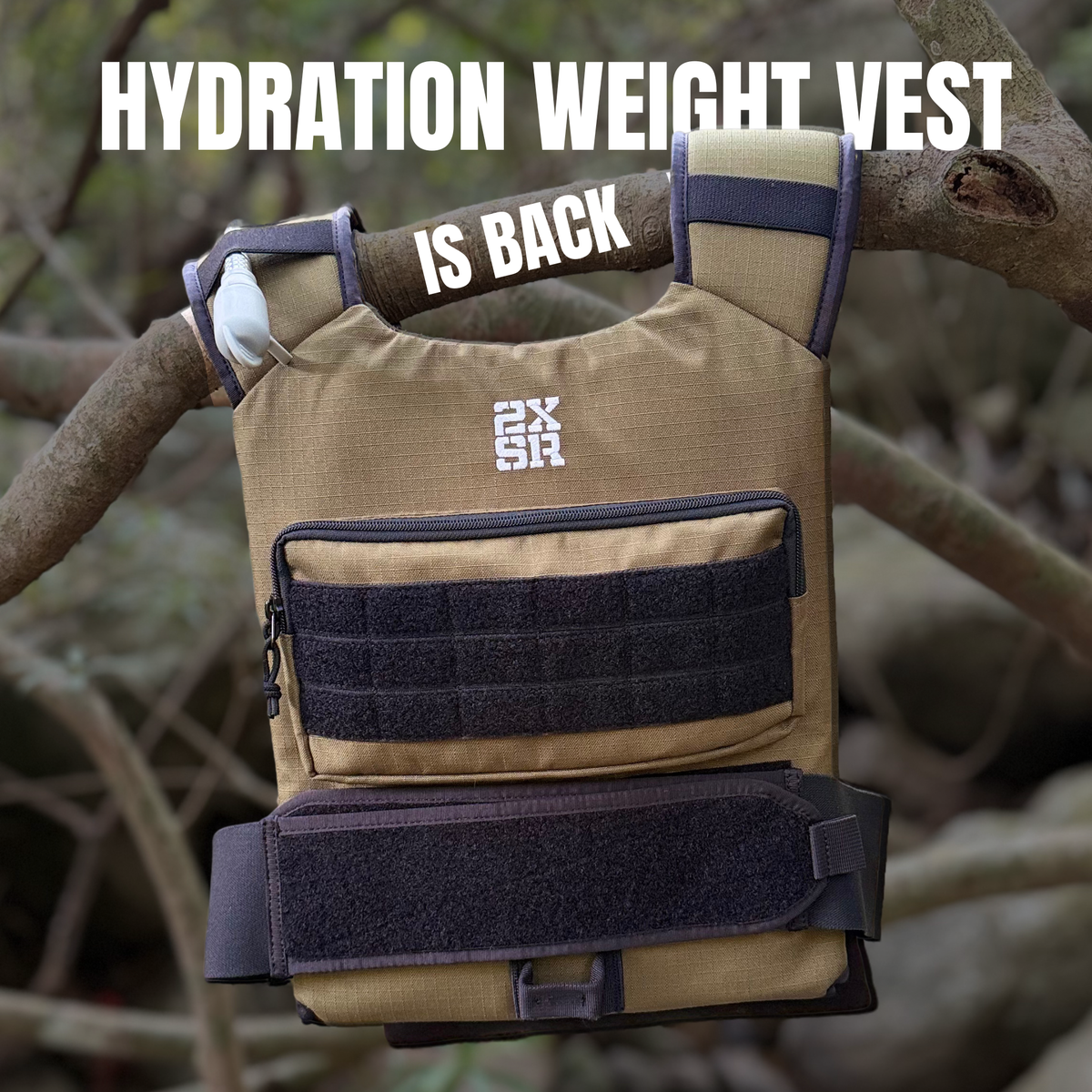
For shorter, higher intensity sessions, the priority flips. CrossFit-style circuits, sprint work, stairs, and bodyweight training all benefit from a load that moves with you instead of behind you. This is where a vest earns its place, and where most vests run into the same limitation: no way to carry water. Anyone who has cut a session short because they needed to set the vest down and grab a bottle knows how disruptive that is mid-set. The Hydration Weight Vest was built around solving that specific problem, with the reservoir integrated into the vest so hydration stops competing with training time.
How much weight to start with
Both tools reward starting lighter than you'd guess. For rucking, most beginners do well starting around 5 to 10 pounds, or roughly 5 to 10 percent of body weight, and building from there once posture and breathing stay steady under load. For vest training, UCLA Health's guidance of starting near 5 percent of body weight is the safer entry point, with room to progress as your body adapts.
The mistake most people make isn't choosing the wrong tool, it's loading either one too aggressively too soon. Add duration or distance before adding weight. If your stride changes, your posture rounds forward, or the load starts to bounce, that's the signal to scale back rather than push through.
Does one burn more calories than the other
Neither tool has an automatic advantage here. Calorie burn during loaded walking or training comes down to total added weight, your body weight, pace, terrain, and how long you sustain the session, not which piece of gear you're wearing. A heavier ruck only helps if you can maintain your form and finish the session. The same is true of a heavier vest. Chasing a bigger number on the load rather than a better quality session tends to backfire through shortened workouts or nagging injuries.
A quick safety note
Anyone with back, neck, joint, or cardiovascular concerns should talk to a doctor before adding load to walking or training, regardless of which tool they choose. Sharp pain, numbness, or a noticeably altered gait are reasons to stop and reassess, not push through.
Which one to start with
If your training centers on rucking events, long outdoor sessions, or you simply need to carry gear and water over distance, start with the SandRuck. If your focus is shorter, higher intensity work where hands free movement and hydration matter more than storage, the Hydration Weight Vest is the better starting point. Most serious trainees eventually use both, since they're built for opposite ends of loaded training rather than competing for the same job.
Shop the SandRuck / Shop the Hydration Weight Vest / Shop the Hydration Weight Vest]

Leave a comment
This site is protected by hCaptcha and the hCaptcha Privacy Policy and Terms of Service apply.